
COSTA DEL SOL — INVESTMENT
Costa del Sol Property Market Outlook: What Savvy Investors Are Watching
Your Expert Guide to Living and Investing on the Costa del Sol


There is a category of property investor who does not follow trends — they anticipate them. They are the buyers who were in Estepona before the town’s renaissance became international news, who recognised La Cala de Mijas before the weekend supplements did, and who understood the significance of Málaga’s technology corridor long before the property prices reflected it. They are the investors who have consistently outperformed the market on the Costa del Sol, not through luck, but through the discipline of watching the right indicators.
This article is written for that kind of buyer — or for those who aspire to think like one. The Costa del Sol’s property market in 2026 offers genuinely compelling opportunities, but it also rewards those who understand its dynamics with some precision. What follows is an honest assessment of the forces shaping the market right now, and where the most sophisticated investors are directing their attention.
The Structural Foundation: Why This Market Is Different
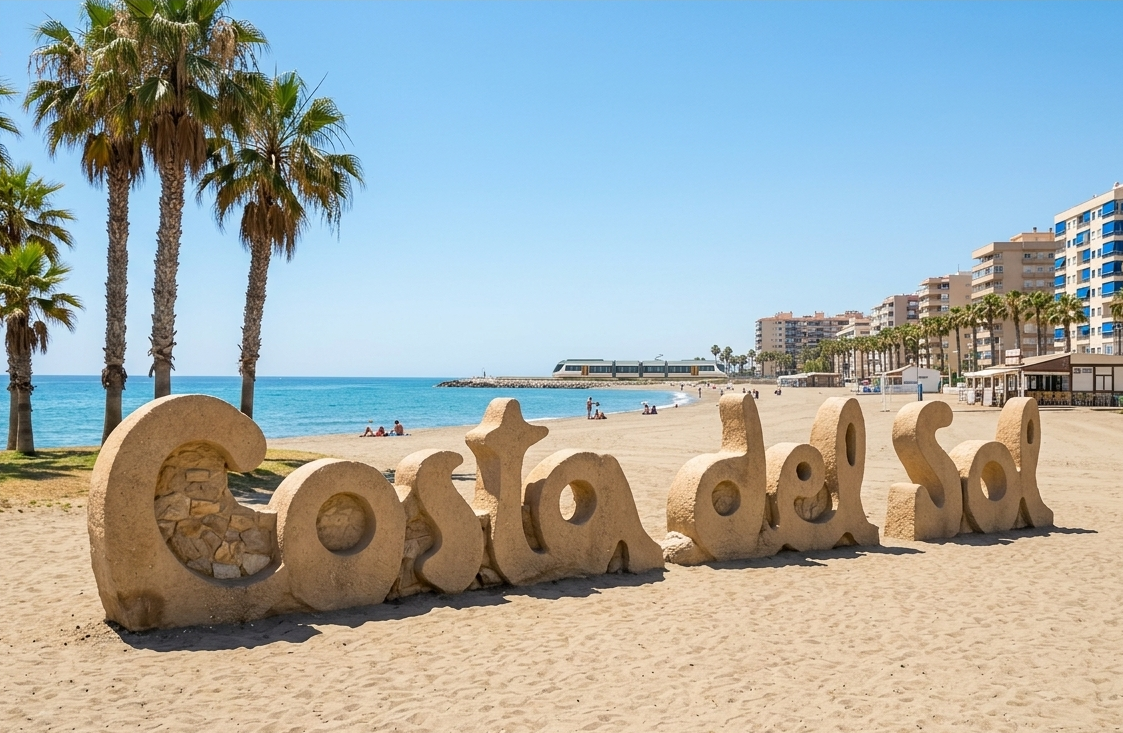
Any serious analysis of the Costa del Sol property market must begin with the fundamentals, because it is the fundamentals that explain the market’s remarkable resilience over time. Unlike markets driven primarily by speculative demand or by the particular conditions of a specific economic cycle, the Costa del Sol is anchored by something far more durable: sustained, structural demand from a large and diverse international buyer base.
The region draws buyers from the UK, Ireland, Scandinavia, the Netherlands, Germany, Belgium, and increasingly from the United States and the Middle East — each motivated by broadly similar factors: climate, lifestyle, quality of healthcare, excellent international connectivity, and a proven track record as both a place to live and a place to invest. This demand is not cyclical. It does not disappear when interest rates rise or when economic confidence softens. It moderates, briefly, and then it returns.
On the supply side, the constraints are structural too. The Costa del Sol’s most desirable locations — first-line beach, elevated sea-view plots, established golf urbanisations with planning and infrastructure already in place — are finite. There is, simply, no more coastline to build on. This supply constraint is the silent engine of the market’s long-term price performance, and it is as relevant in 2026 as it has ever been.
The Málaga Effect: A City That Changes Everything
Perhaps the single most significant development in the Costa del Sol’s property market over the past five years has not happened on the coast at all — it has happened in Málaga city. The arrival of major international technology companies, the expansion of the University of Málaga’s tech and innovation ecosystem, and the city’s growing reputation as one of Europe’s most liveable and culturally vibrant urban centres have created an entirely new demand dynamic for the region.
Málaga is now attracting a profile of buyer — younger, professionally successful, internationally mobile — that the Costa del Sol had not previously seen in significant numbers. These are people who want the lifestyle of the south of Spain, but who also need — or want — proximity to a genuinely international city. They are driving demand not just in Málaga’s premium urban neighbourhoods, but along the entire western corridor of the coast, as the city’s commuter catchment expands.
Investors who understood this shift early — particularly those who positioned themselves in Málaga’s historic centre and eastern waterfront — have seen exceptional returns. The question for 2026 is where the second wave of that effect is headed. The answer, broadly, points west: to the municipalities that offer Málaga’s connectivity with a lower price point and a more expansive lifestyle proposition.
The New Build Premium — and Why It Persists
One of the most consistent features of the Costa del Sol market in recent years has been the premium commanded by quality new-build and off-plan properties — and the persistence of that premium even as overall market conditions have moderated elsewhere in Europe.
The explanation is straightforward. The standard of new-build product available on the Costa del Sol today — in terms of design, specification, sustainability credentials and resort-standard amenities — is simply without precedent in the market’s history. Contemporary buyers, particularly from Northern Europe, have expectations that only new-build can reliably meet: energy efficiency ratings, smart home technology, biophilic design, EV charging infrastructure, and community facilities that can include spas, concierge services and private beach clubs.
Developers have responded to this demand by producing projects at a quality level that continues to attract buyers at prices that reflect that quality. The result is a new-build market where well-positioned developments from credible developers continue to sell — sometimes in their entirety — before a single brick has been laid.
Rental Yields: The Investor’s Secondary Case

For investors who require their Costa del Sol property to generate income as well as capital appreciation, the rental market provides a compelling secondary case. The region attracted over 13 million tourists in 2024, a number that has grown consistently year on year, driven by Málaga Airport’s expanding route network and the Costa del Sol’s enduring position as one of Europe’s most popular short-break and holiday destinations.
Short-term rental yields in the most sought-after locations — Marbella’s Golden Mile, beachfront Estepona, elevated Benahavis urbanisations — typically range from 5% to 8% gross, depending on the property type, location and level of management. Well-presented, well-located properties let through professional management companies consistently achieve high occupancy rates through extended seasons that now run from March to November.
The regulatory environment for tourist rentals in Andalucía is evolving, and investors should take independent advice on the licensing requirements applicable to their specific municipality. The broad principle, however, is that well-regulated short-term rental markets provide more stability, not less, for serious operators.
Where Savvy Investors Are Looking in 2026
The honest answer is that the most sophisticated investors we work with are not all looking in the same place — because their objectives differ. Those seeking maximum capital growth over a five to ten year horizon are focused on the emerging municipalities: Casares, Manilva and the western corridor beyond Estepona, where land values remain relatively accessible and the infrastructure investment now underway will, in time, drive significant appreciation.
Those seeking a blend of lifestyle and yield are focused on La Cala de Mijas, Fuengirola and Benalmádena — established communities with strong rental demand, year-round resident populations, and a quality-of-life proposition that attracts both long-term tenants and short-term visitors.
Those at the very top of the market — seeking trophy assets, privacy and the certainty of enduring prestige value — remain focused on Benahavis, Sierra Blanca, and Marbella’s Golden Mile. These markets move slowly, but they move in one direction only.
The Interest Rate Tailwind
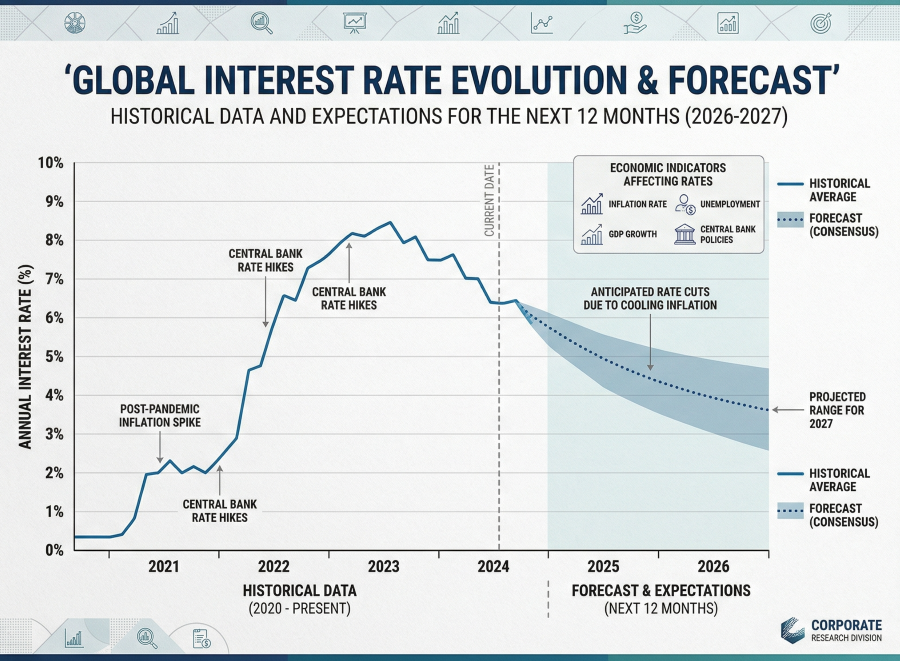
After a period of elevated interest rates that moderated buyer activity in 2023 and into 2024, the trajectory of European monetary policy is now providing a meaningful tailwind for the Costa del Sol market. The European Central Bank’s easing cycle — which began in 2024 and continued through 2025 — has improved mortgage affordability for both resident and non-resident buyers, and renewed confidence among buyers who had been waiting for clearer conditions.
The buyers who acted during the higher-rate period, when competition was slightly less fierce and developers were more willing to negotiate, have already seen the benefit. Those looking at the market now will find conditions that are more competitive — but also, in a falling-rate environment, financing that is increasingly attractive.
Our Considered View
We do not deal in predictions, and we would not advise any investor to make a decision based on a single market commentary. What we do offer is the perspective of a team that lives and works in this market every day — that sees the transactions, watches the demand, and understands the micro-dynamics of individual locations that no macro analysis can fully capture.
Our considered view is this: the Costa del Sol in 2026 offers a more nuanced set of opportunities than a headline view of the market suggests. The simple observation that prices have risen significantly over recent years is true — but it obscures the variation between locations, property types and quality tiers that creates genuine opportunity for the well-informed buyer.
The market rewards specificity. Knowing which municipality is in the early stages of a value uplift, which developer has a track record of delivery, which location offers the best balance of lifestyle and yield for a particular buyer’s profile — this is where the value lies. And this is precisely the kind of knowledge that our team is here to share.
Thinking About Making the Move?
Our team of specialist advisors has been helping international buyers find their perfect home on the Costa del Sol for 15 years. Whether you are at the early stages of research or ready to view, we would love to hear from you.
T: +34 951 177 422 E: info@mosaicrealty.es W: www.mosaicrealty.es